Dec 05, 2025
SWOT Analysis: A Complete Guide for Business Strategy & Success
|
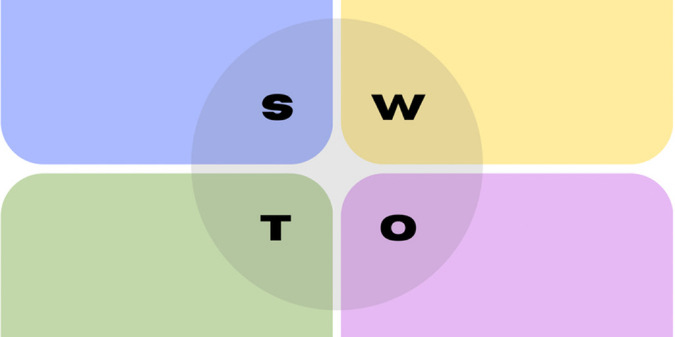
In the world of high-stakes business, strategic clarity is a necessity. For executives and entrepreneurs, accurately assessing your market position is paramount, and a robust SWOT analysis is an indispensable tool for the job. It provides a structured, objective lens through which to view your business, transforming complex data into a clear roadmap for action. Understanding the Fundamentals: What is a SWOT Analysis?A SWOT analysis is a foundational strategic planning technique used to identify and evaluate the key internal and external factors that influence an organisation's success. The acronym SWOT stands for Strengths, Weaknesses, Opportunities, and Threats. Developed by Albert Humphrey at the Stanford Research Institute in the 1960s, its enduring relevance speaks to its simple power. At its core, the framework compels decision-makers to move beyond gut feelings and confront the realities of their capabilities and the environment they operate in, providing a comprehensive view of the business landscape. The Core Components of SWOT AnalysisTo conduct an effective analysis, it is crucial to understand the four distinct quadrants that form the framework. These components of SWOT analysis are logically divided into two categories: internal factors (Strengths and Weaknesses), which are within the organisation's control, and external factors (Opportunities and Threats), which exist in the broader environment. Internal Factors: Strengths and WeaknessesThese are attributes intrinsic to your organisation. An honest and rigorous assessment here is fundamental to the entire process. S - StrengthsStrengths are the internal, positive attributes that provide a competitive advantage. These are the elements your organisation excels at. When identifying them, think beyond the obvious. Consider:
Quantifying these strengths (e.g., "brand recognition with a 95% positive sentiment score") adds weight to your analysis. W - WeaknessesWeaknesses are the internal, negative factors that place your business at a disadvantage. Acknowledging weaknesses is a sign of strategic maturity, not failure. These are areas requiring improvement or mitigation. Examples include:
External Factors: Opportunities and ThreatsThese are elements outside your company's direct control but can have a profound impact on its future. O - OpportunitiesOpportunities are external factors your organisation could leverage for growth and advantage. These often emerge from market shifts or environmental changes. Proactive identification is key. Look for:
T - ThreatsThreats are external factors that could harm your organisation's performance or viability. Anticipating threats allows you to develop contingency plans. These can include:
How Does SWOT Work? A Practical ApplicationThe value of a SWOT analysis lies not just in listing points, but in synthesizing them. Understanding how SWOT works means connecting the quadrants to generate actionable strategies. The Process of Conducting a SWOT AnalysisAssemble a Diverse TeamEffective analysis requires multiple perspectives. Gather individuals from various departments—marketing, sales, operations, finance, HR—to avoid siloed thinking and capture a holistic view of the organisation. Brainstorm and List with PrecisionConduct a dedicated session to brainstorm points for each of the four quadrants. Encourage specificity. Instead of "good marketing," specify "a highly effective content marketing engine that generates 50% of our inbound leads." Organise in a 2x2 MatrixArrange the finalised points into a classic SWOT matrix. This visual layout clarifies the relationships between the internal and external factors, setting the stage for strategic formulation. Develop Actionable Strategies with TOWSThe crucial final step is to move from analysis to action. A powerful method is the TOWS Matrix, which pairs internal and external factors to define strategic options:
Illuminating the Concept with SWOT Analysis ExamplesTo see the theory in practice, reviewing clear SWOT analysis examples is invaluable. Consider a high-level analysis of a globally recognized innovator like Tesla, Inc. SWOT Analysis Example: Tesla, Inc.Strengths:
Weaknesses:
Opportunities:
Threats:
The Strategic Benefits of SWOT AnalysisIntegrating a SWOT analysis into your strategic planning cycle yields critical advantages for navigating a competitive landscape. Facilitates Strategic PrioritizationThe analysis forces clarity on what matters most. It helps leaders distinguish between urgent tasks and important strategic imperatives, ensuring that finite resources—capital, talent, and time—are allocated for maximum impact. Enhances Competitive PositioningBy identifying a sustainable competitive advantage (leveraging unique strengths) and pinpointing vulnerabilities (addressing weaknesses), you can formulate strategies to purposefully strengthen your market position against competitors. ConclusionUltimately, a SWOT analysis is more than a business school exercise; it is a dynamic tool for ambitious leaders. By providing the strategic clarity needed to scale a company, launch a venture, or chart a career path, it becomes the foundation upon which powerful, data-driven decisions are made. Ready to transform your strategic planning? Begin by applying this framework to your most pressing business challenge today. For deeper insights into executive strategy and building a resilient enterprise, consider subscribing to our newsletter for exclusive analysis and reports. |