Apr 29, 2025
Why Do South Asians Have Arranged Marriages?
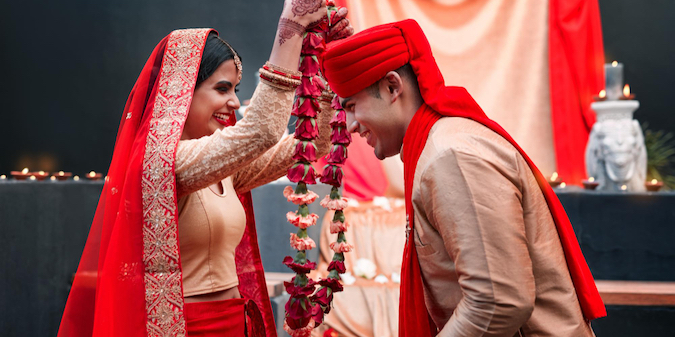
1. Introduction: More Than a Match—A Social EcosystemWhen Western audiences hear the term arranged marriage, they often picture two strangers ushered into a lifelong commitment by meddling relatives. In reality, South Asian arranged marriages sit at the intersection of sociology, economics, spirituality, and—yes—modern romance. They are not relics of the past but evolving institutions that continue to influence how nearly two billion people approach partnership. Understanding why they persist means zooming out from the wedding aisle to the broader cultural canvas: centuries-old kinship structures, religious philosophies, and contemporary market forces that quietly choreograph every introduction. 2. Historical Roots: Survival, Status, and StatecraftBefore nation-states, South Asian kingdoms forged alliances in precisely the same way European monarchies did—through marriages that consolidated land, labor, and loyalty. A union was less about two individuals and more about knitting families into a sturdier economic fabric. Over time, these macro-alliances trickled down to village life: land-owning castes reinforced boundaries, artisanal guilds protected trade secrets, and agrarian communities safeguarded scarce resources by marrying “within.” What looks like restrictive matchmaking today began as a pragmatic survival tool in a dense, diverse subcontinent where outsiders were a fiscal risk. 3. Collectivism Over Individualism: “We” Is the First PronounWhile the West valorizes self-actualization, South Asian cultures emphasize samaj (community) and parivaar (extended family). Life-changing decisions—college major, career path, marriage—are commonly made through a collaborative lens. Elders consider their adult children stakeholders in a multi-generational venture, not lone entrepreneurs of the heart. Arranged marriage, therefore, is less about outsourcing choice than co-authoring it. Parents vet prospects based on compatibility metrics—values, habits, family reputation—that protect collective harmony. For many young South Asians, this feels less like interference and more like maximal due diligence. 4. Religious Frameworks: Dharma, Nikah, and Sacred ContractsHindu Dharma designates marriage (vivaha) as a rite of passage that knits spiritual duty (dharma), prosperity (artha), and pleasure (kama). Because the union is seen as both moral obligation and cosmic partnership, it warrants communal oversight. In Islamic South Asia, nikah is a contract that balances personal agency and family counsel; Prophet Muhammad encouraged parents to help their children find virtuous spouses. Sikh Anand Karaj, Christian church weddings in Kerala, and Buddhist rituals in Sri Lanka all carry their own theological reasoning for elder involvement. Across religions, matrimony is considered too sacred—and too socially consequential—to be left to chance. 5. Endogamy and the Compatibility Algorithm Before Apps ExistedLong before machine-learning models predicted swipe success, South Asian families ran their own algorithms. Caste, linguistic group, regional cuisine, even astrological charts operate as filters to minimize friction after the honeymoon. Critics call it exclusionary; supporters counter that compatibility safeguards emotional bandwidth in a society where divorce still carries stigma. Think of it as an early-warning system: a way to ensure that when conflicts arise—as they do in every couple—partners are arguing within a shared cultural vocabulary. 6. Economics of the Household: Dowry’s Dark Shadow and Modern Asset ManagementIn agrarian economies, marrying within preserved farmland and livestock lines, effectively functioning as a portfolio-protection strategy. Unfortunately, the dowry system (illegal but still practiced) grew out of this logic, morphing from voluntary gifts into coercive payments. Yet today’s middle-class arranged marriages are also shaped by different economic calculators: dual incomes, geographic mobility, and professional networks. Families scrutinize pay stubs and postgraduate degrees much the way venture capitalists review pitch decks—minus the term sheets, plus henna ceremonies. 7. Education and Career: The Paradox of Choice FatigueMillennial and Gen Z South Asians attend globally ranked universities, relocate for MBAs, and excel in competitive job markets. Ironically, expanded social circles can lead to “choice paralysis.” Arranged introductions then act as curated shortlists. Parents leverage alumni associations, professional guilds, and community WhatsApp groups, functioning almost like executive recruiters who deliver hand-picked candidates to time-strapped high achievers. Far from resisting, many urban professionals welcome the efficiency—especially those clocking eighty-hour workweeks in finance or tech. 8. Diaspora Dynamics: Re-Negotiating Identity in New York and NairobiMove the conversation to Toronto, Dubai, or Johannesburg, and new variables emerge. First-generation immigrants often cling to arranged marriage as cultural ballast in alien seas, while their children juggle hyphenated identities. For them, an arranged introduction can become a comfortable bridge between parental expectations and local dating norms. Because families live continents apart, they may rely on video calls, LinkedIn bios, or alumni databases to do preliminary vetting. Ironically, distance has nudged diaspora clans toward more flexible criteria: intercaste, inter-language, sometimes even interfaith relationships that would raise eyebrows back in the ancestral village. 9. Technology’s Remix: Matrimonial Portals, Crypto-Dowries, and Luxury MatchmakingThe last two decades exploded with digital platforms—Shaadi.com, BharatMatrimony, Dil Mil—that graft Silicon Valley UX onto centuries-old customs. Profile tags replicate matchmaking heuristics: culinary preferences, spiritual leanings, even star-sign compatibility. Increasingly, affluent South Asians bypass generic portals for boutique services such as MillionaireMatch.com, where curated introductions straddle tradition and premium lifestyle. Luxury matchmaking firms now offer background checks, compatibility analytics, and even prenup mediation, positioning themselves as data-driven family uncles with Ivy League MBAs. The algorithm may have replaced the astrologer’s parchment, but the objective—crafting a resilient marital alliance—remains intact. 10. Changing Attitudes: Feminism, Consent, and the Right of RefusalCritics argue that arranged marriage erodes personal autonomy, especially for women. The reality is more nuanced and rapidly evolving. In many urban households, daughters veto suitors with the same authority sons have long wielded. Prospective partners text, meet for coffee, or travel together before deciding—hardly the blindfolded leap dramatized in Bollywood period films. Moreover, rising female literacy and earning power recalibrate bargaining chips: today’s brides negotiate hyphenated surnames, geographic moves, and equitable domestic labor before the engagement ring even slides on. 11. Love After the Vows: When Affection Follows AgreementA surprising body of social-science research shows that many arranged couples report equal or higher marital satisfaction than love-marriage peers by year ten. The logic is not mystical but behavioral: starting with aligned life goals and family support systems can reduce early-stage friction, allowing affection to grow unimpeded by existential disputes. South Asian literature echoes this arc—stories where companionship blooms gradually, like jasmine releasing fragrance at dusk. For all the spreadsheets and star charts, the emotional payoff is decidedly analog. 12. The Critique: Class Gatekeeping and Caste EntrenchmentNo exploration would be complete without acknowledging the system’s ethical landmines. Arranged frameworks can ossify caste hierarchies, marginalize LGBTQ+ individuals, and turn marriage into a transactional sport that sidelines love. Social activists within South Asia push for reforms—outlawing dowry, amplifying inter-caste unions, legal recognition for same-sex couples—to ensure that familial involvement uplifts rather than oppresses. The institution is not impervious to critique; it is being remodeled in real time by grassroots campaigns and legislative interventions. 13. Hybrid Futures: From “Arranged” to “Assisted”The lexicon itself is shifting. Millennials often describe their parents’ role as assistance rather than orchestration. Think of it like a trusted advisory board: they introduce vetted prospects, but the final vote rests with the couple. Some families hold “meet-cue parties” where multiple introductions happen in a casual setting—speed-dating meets Diwali potluck. Others rely on luxury matchmakers who blend psychometric testing with cultural fluency. The binary of arranged vs. love is giving way to a spectrum, where data analytics, individual choice, and community support coexist. 14. The Emotional Economics: Trust as Venture CapitalArranged marriage allocates emotional risk across a safety net. Instead of two individuals hedging alone, entire families underwrite the venture—offering mentorship, babysitting resources, or financial fallback if crises hit. Think of it as venture capital for the soul: high-touch investors who supply not just funds but operational expertise and robust networks. Critics see this as helicopter parenting; advocates see it as relational insurance that allows the marital startup to innovate without fear of catastrophic failure. 15. Impact on Luxury Matchmaking: Opportunity or Obsolescence?At first glance, professionally curated platforms may seem redundant in a culture where aunties reign supreme. Paradoxically, they flourish precisely because families outsource due diligence to accredited experts. MillionaireMatch.com positions itself as a value-add layer: biometric ID verification, confidentiality for high-net-worth clients, and cross-border introductions that transcend parochial boundaries. For status-conscious families eager to adapt without relinquishing standards, premium services provide a modern patina on ancestral practices. 16. The Pandemic Stress Test: Resilience in LockdownCOVID-19 shuttered wedding halls but amplified digital matchmaking. Zoom courtships became the new norm, and families learned to evaluate suitors by Wi-Fi stability and bookshelf backdrops. Interestingly, arranged frameworks proved agile: once travel bans lifted, many couples reported smoother transitions because parental negotiations—finances, living relationships, future childcare—were hammered out during lockdown video calls, leaving the pair free to focus on chemistry. 17. Conclusion: Tradition in Beta ModeArranged marriage in South Asia is neither an archaic monolith nor a utopian recipe. It is a living, breathing organism—morphing with GDP growth, feminist discourse, diaspora experiences, and even pandemic protocols. At its best, it offers a scaffold of support and an extended vetting committee. At its worst, it can ossify inequalities. The institution endures because it keeps iterating, blending spreadsheets with star signs, FaceTime with family councils, and—more recently—luxury matchmaking portals with centuries of cultural memory. Understanding why arranged marriages persist is really about decoding how South Asians choreograph change: revering ancestry while beta-testing the future. Whether arranged, assisted, or algorithm-enhanced, the core aspiration remains universal: to build partnerships resilient enough to weather both financial storms and the quieter tremors of everyday life. In that sense, South Asians don’t marry despite their community’s involvement—they marry with it, weaving love into an intergenerational tapestry that continues to unfurl, thread by thread, across a rapidly shifting world. |