Jun 25, 2025
Traditional Family Values vs. Modern Family Structures: The Great Western Divide
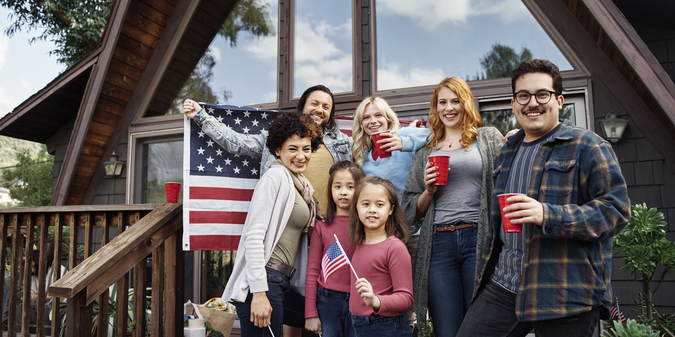
The Great Western Family Revolution: From Traditional to Modern StructuresIn the heart of America's culture wars, few issues ignite passion like the transformation of family structures. From the conservative Bible Belt to the liberal coasts, the question looms large: Is the traditional family—defined as one husband, one wife, and their children—being replaced by a patchwork of modern alternatives? This debate transcends politics, touching the very essence of how we define family, values, and society itself. As societal norms evolve, the once-clear boundaries of family life are blurring. This article delves into the data, perspectives, and global trends that are reshaping the concept of family in the 21st century.
I. The Traditional Family: A Shifting FoundationThe traditional family model—characterized by heterosexual marriage, clear gender roles, and children raised by biological parents—has long been considered the bedrock of Western society. In America, this model reached its zenith in the 1950s, epitomized by popular culture icons like "Leave It to Beaver" and "The Donna Reed Show." The Traditional Family Defined
This model was not merely a lifestyle choice but a moral framework endorsed by major religions and political institutions. As recently as 2000, 68% of American children lived with both biological parents in a first marriage (U.S. Census Bureau, 2000 Family Structure Report).
II. The Changing American Family: Data Tells the StoryThe percentage of American adults who have never been married is at a historic high, with 35% of men and 30% of women in this category as of 2022 (Pew Research Center, 2022 Marriage Trends Study). This represents a dramatic shift from just decades ago. Rise of Alternative Family StructuresToday's American family landscape includes:
Regional Variations Within Western SocietiesThe transformation isn't uniform across Western countries:
Future Predictions: Experts suggest that future society's family models will likely display more diversity and flexibility (Journal of Marriage and Family, 2023), including digital families connected through technology rather than geography.
III. The Great American Divide: Conservative vs. Liberal PerspectivesFrom a conservative perspective, America faces a transformation of traditional family structures:
Religious conservatives argue that the traditional family is an important cornerstone of social stability and cultural inheritance, and its evolution leads to social adaptation. Liberal View: Evolution, Not DeclineFrom a liberal perspective, changing family structures represent the positive significance of diverse family forms:
Liberals point to studies showing that as long as family relationships are harmonious and children receive adequate care and support, regardless of form, there will be positive effects (Child Development, 2022).
IV. Research and Evidence: What Do Studies Show?Research presents a complex picture:
The Role of "Family Values"The term "family values" itself is problematic, as family values like responsibility, stability, and sense of belonging are impacted (Journal of Social Issues, 2022). As one researcher notes, The concept of family is the cornerstone of Chinese society, but what that concept means is increasingly contested. The debate around "family values" often reflects deeper social divides, as "family values" is frequently "a term often used as a code and marker of race and class" (Sociology of Education, 2021).
V. Beyond the American Context: Global PerspectivesEuropean VariationsWestern societies show different approaches to family structure:
The Role of ReligionReligious affiliation strongly correlates with family structure views:
Global TrendsFamily structure changes are not limited to the West:
VI. The Future of Family: Where Are We Headed?Emerging TrendsSociologists identify several patterns:
Potential ScenariosExperts suggest multiple possible futures:
As one study notes, Marriage views have changed. The number of children born has changed. The view of having boys or girls has changed (Population and Development Review, 2022). Future PredictionsTechnology will likely play a significant role:
As Dr. Stephanie Coontz, family historian, predicts: "The family of the future will be more diverse than ever, with multiple caregivers and varied structures, but the fundamental need for love and connection will remain constant" (The Future of the Family, 2023).
VII. Finding Balance: Traditional Wisdom in Modern ContextsThe most successful approach may be one that:
As societies evolve, perhaps the question isn't whether traditional family structures are being replaced, but how we can create new family models that capture the best of traditional wisdom while embracing modern realities. Real Stories: Families Navigating ChangeCase 1: The Johanssons of StockholmMaria and Erik Johansson, a Swedish couple, have two children but never married. "In Sweden, it's completely normal to have children without marriage," explains Maria. "We have the same legal rights as married couples, and our children have the same benefits." Their family represents Sweden's 70% rate of children born to unmarried couples (Swedish Statistics Office, 2023). Case 2: The Nguyens of Los AngelesAfter their divorce, Vietnamese-American couple Linh and David Nguyen created a successful co-parenting organization. "We realized our cultural expectations were causing conflict," says Linh. "By creating our own family structure that blended Vietnamese values with American flexibility, we've given our children stability while finding personal happiness." Their blended family includes their daughter, David's new partner, and her son from a previous relationship. Case 3: The Al-Fahims of DubaiIn more traditional societies, change comes differently. UAE national Ahmed Al-Fahim and his wife Fatima have adapted traditional family values to modern life. "We maintain our cultural traditions but have created a partnership where both careers are valued," explains Ahmed. "My father never saw his wife as an equal partner, but I recognize Fatima's education and professional skills as assets to our family." Join the ConversationThe evolution of family structures continues to shape our societies. Are you navigating family changes in your own life? Do you have experiences with traditional or modern family structures? Share your perspective with like-minded individuals who value thoughtful discussion about family, values, and society. Join MillionaireMatch today to connect with others interested in the changing face of family and relationships in Western societies and beyond. Whether you come from a traditional background or embrace modern family structures, your perspective matters in this important global conversation. |